Physical Address
304 North Cardinal St.
Dorchester Center, MA 02124
Physical Address
304 North Cardinal St.
Dorchester Center, MA 02124

Are you tired of wrestling with a heavy gas mower every weekend or running extension cords for a battery-powered model across your lawn? What if your grass could cut itself while you sipped coffee on the deck? The latest wave of robotic mowers promises exactly that, but many still require buried boundary wires or a bulky RTK base station, which complicates setup. We spent several weeks testing a machine that claims to eliminate both hassles entirely. This MOVA LiDAX Ultra 3000 AWD review will break down whether this wire-free, RTK-free robot mower lives up to its premium price tag and delivers on its ambitious promises for lawns up to 0.75 acres.
In this comprehensive hands-on evaluation, we’ll cover real-world performance on slopes, edge-cutting precision, obstacle avoidance, and app functionality. Before you pull the trigger on any robotic mower, you need to know the honest pros and cons. We purchased the MOVA LiDAX Ultra 3000 AWD and put it through rigorous tests on a complex yard with thick grass, wet patches, and steep banks. For a deeper look at the latest in smart lawn care technology, check out our guide to the best robot lawn mowers of 2026. Let’s dive into the details and see if this mower is the hands-off solution you’ve been waiting for.
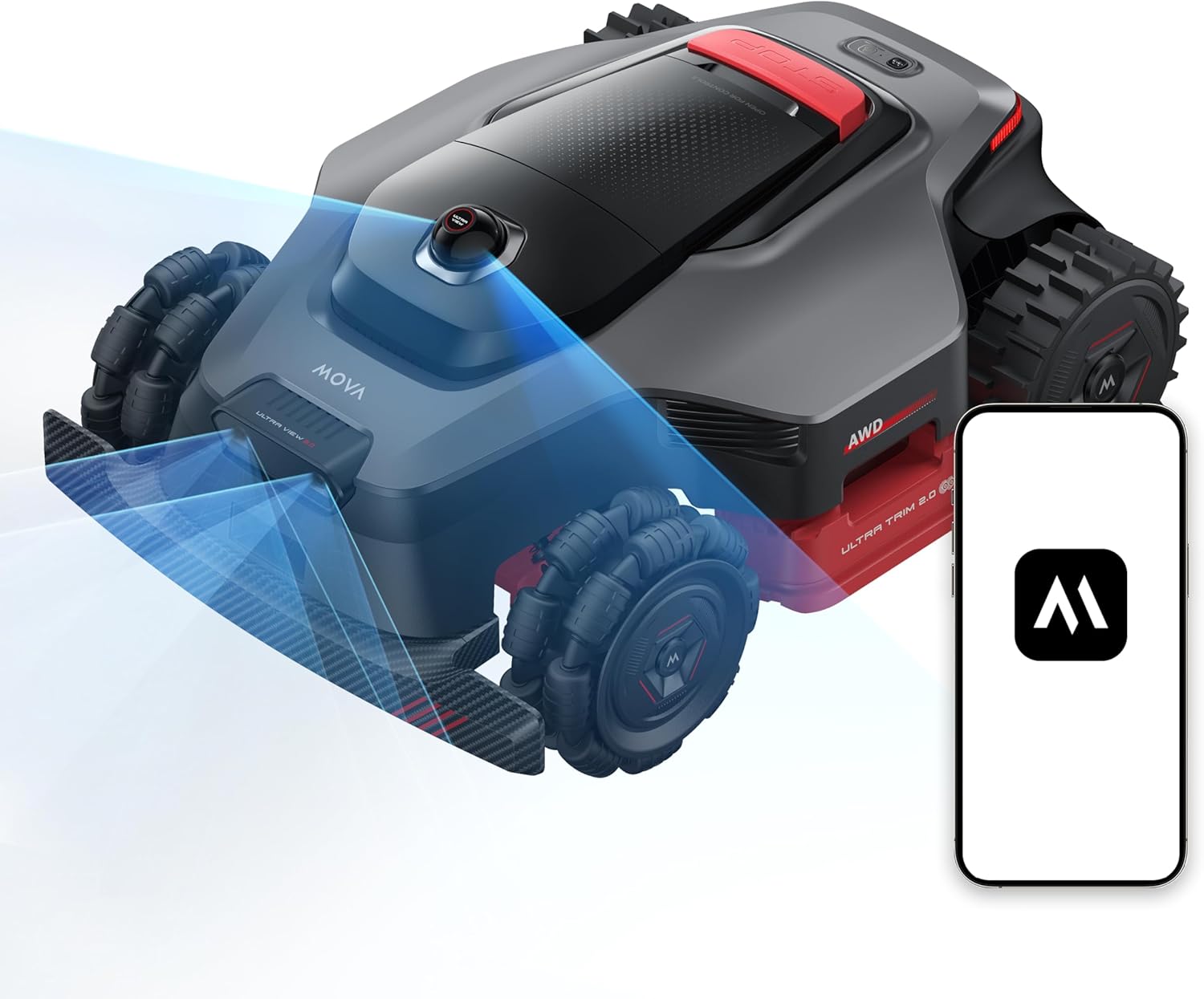
The MOVA LiDAX Ultra 3000 AWD represents a significant leap forward in the robot mower market. It sits at the top of MOVA’s new LiDAX series, positioned as a premium, no-compromise solution for homeowners with medium to large lawns. Its primary innovation is the elimination of both perimeter wires and the RTK base station required by most competitors. Instead, it relies on a sophisticated sensor suite: 360-degree 3D LiDAR combined with AI dual-vision cameras. This allows the mower to navigate, map, and avoid obstacles with centimeter-level precision right out of the box.
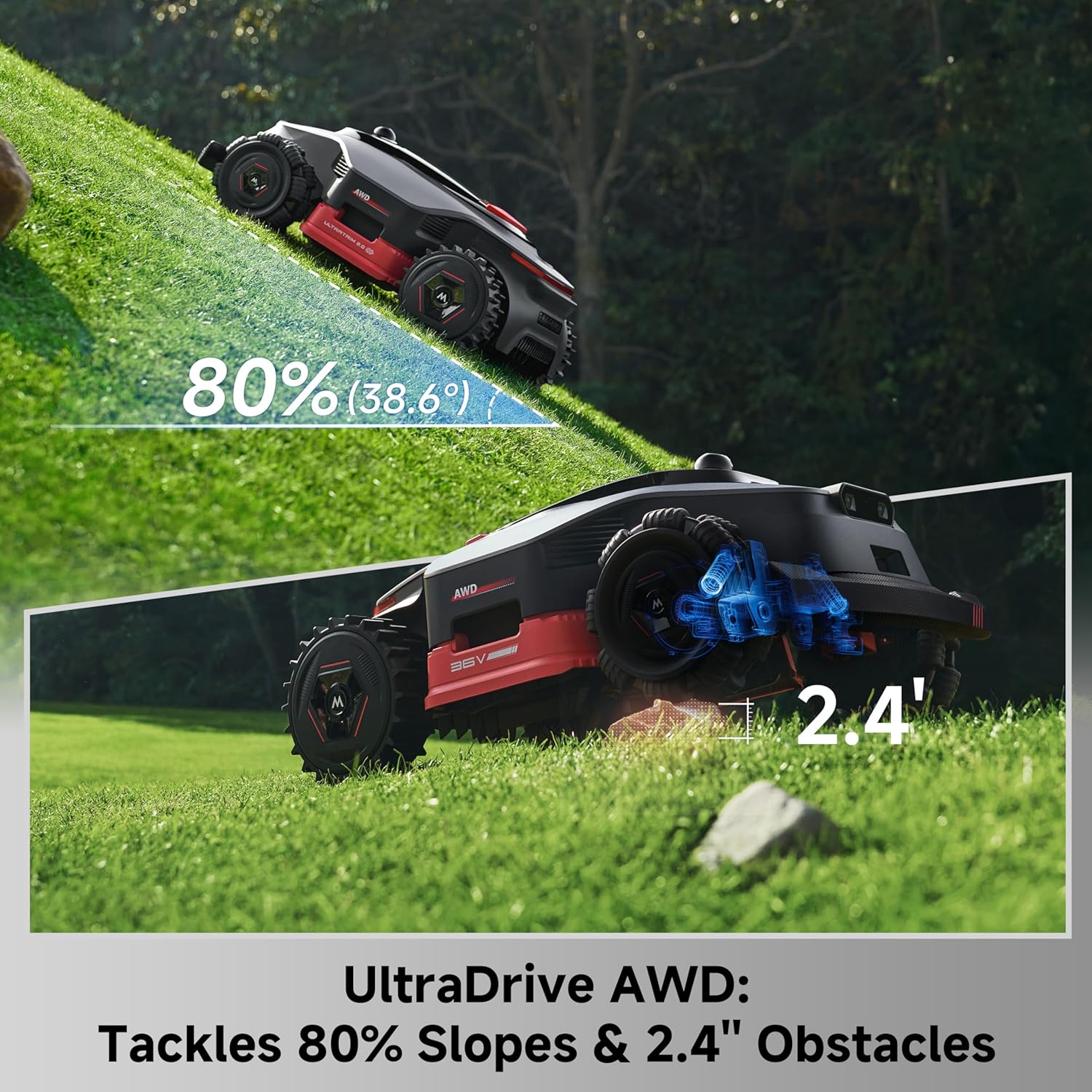
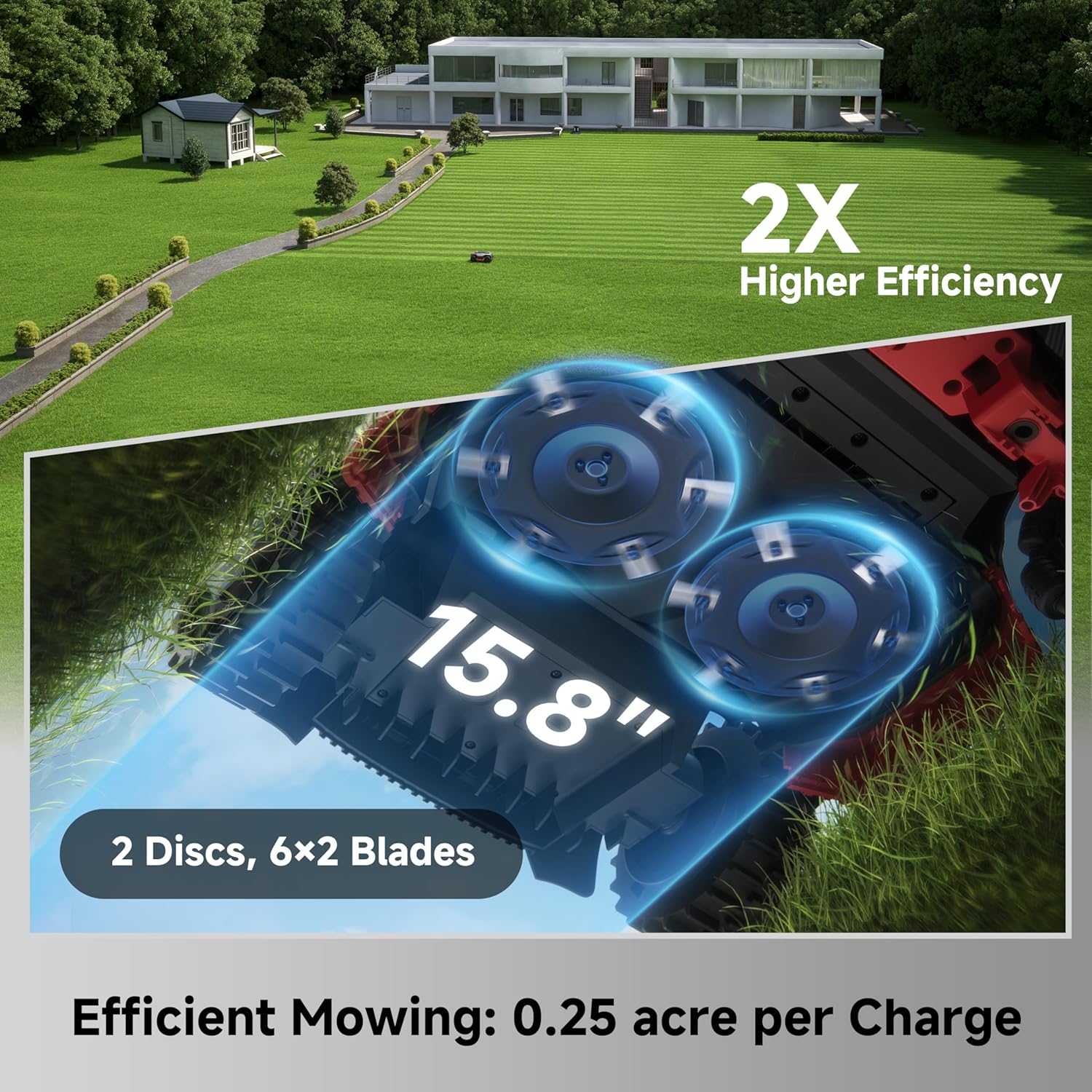
Targeted at users who want true “set it and forget it” operation, the MOVA mower also features true all-wheel drive (AWD) with four independent hub motors to handle slopes up to 80 percent and obstacles up to 2.4 inches. The cutting height adjusts electronically from 1.2 inches to 3.9 inches, and the dual-disc system with 12 blades and a 15.8-inch cutting width promises efficient mowing. With 4G connectivity included for three years, it adds a layer of security and remote monitoring that many rivals charge extra for. This is not just another robot mower; it’s a comprehensive, fully autonomous lawn management system.
| Specification | Detail |
|---|---|
| Model | MOVA LiDAX Ultra 3000 AWD |
| Recommended Lawn Area | Up to 0.75 Acre (per charge up to 0.25 Acre) |
| Weight | 52 Pounds |
| Dimensions (D x W x H) | 29 x 21 x 12 Inches |
| Cutting Width | 15.8 Inches |
| Cutting Height Range | 1.2″ to 3.9″ |
| Battery | 36V, 243Wh (165 min run time) |
| Maximum Slope | 80% |
| Navigation | 360° LiDAR + AI Dual Vision |
| Connectivity | Wi-Fi & 4G (3 years free) |
| Warranty | 3-Year Manufacturer |
For a more detailed comparison against other flagship mowers, read our complete robot mower buying guide.
Unboxing the MOVA LiDAX Ultra 3000 AWD is an experience that sets high expectations. The packaging is robust and well-organized, protecting the heavy 52-pound unit. Inside, you will find the main mower unit itself, which feels substantial and well-constructed from metal and high-quality plastic. The box also includes the charging dock and its power adapter, a user manual, and a few spare blades for the dual-disc cutting system.
First impressions are excellent. The build quality feels premium, with sealed hubs and a sturdy suspension system. The assembly required is minimal—attach the charging station and plug it in. There are no boundary wires or extra sensors to install. The manual is clear, though most of the setup is guided through the app. It’s a refreshingly simple unboxing experience for a device with this much technology. Everything you need for immediate operation is included, although you might want to consider purchasing a protective cover for the charging dock if it will be exposed to direct weather.
First, find a level spot for your charging dock with good Wi-Fi signal and a clear view of the sky for GPS. Place it on a hard surface or very short grass. The setup is app-driven. Download the MOVA app, create an account, and pair the mower. You will need your home Wi-Fi password. Once connected, the mower performs an initial mapping run. This takes about 20-30 minutes for a 0.3-acre lawn. Do not interrupt this process—the mower will scan the entire area using its LiDAR and cameras, creating a centimeter-precise 3D map. No boundary wires are needed for this critical step.
After the map is created, you can set up no-go zones directly on the app. Simply draw virtual fences around flower beds or driveway areas you want the mower to avoid. You can also adjust the cutting height from 1.2 to 3.9 inches easily in the app. For the first cut, we recommend setting the height a bit higher to avoid scalping your lawn. The mower will return to the dock to recharge automatically when the battery is low and resume mowing from where it left off—a very convenient feature.
Daily use is truly hands-off. The mower starts its schedule and navigates using the U-path mowing pattern for efficient coverage. You can manually control it via the app for spot mowing. The real magic is the obstacle avoidance. We tested it with a garden hose and a child’s toy, and the mower stopped and gently navigated around them. For best results, schedule your mowing for dry conditions, as the mower handles slopes better when the grass is not slippery. The mower’s 4G connectivity means you can check its status from anywhere.
Use the dual-map feature to create separate zones with different schedules. For example, mow the front lawn daily but the backyard every other day. You can also set specific modes for each zone, like a “turbo” mode for thick grass. Another pro tip is to use the “Spot Mow” function for targeted areas that need extra attention. The app also allows you to view the mower’s path history and adjust the cutting pattern. Experiment with the cutting height for different seasons—lower in spring and higher in summer heat.
Regular maintenance is straightforward. Clean the underside of the mower after each use to remove grass clippings, especially from the cutting disc and blade area. Check and replace blades as needed; the box includes a spare set. Keep the LiDAR sensor and cameras clean and unobstructed. Store the mower indoors during winter. The charging dock should also be kept clean. The mower’s software updates over Wi-Fi, ensuring you have the latest obstacle recognition improvements.
If the mower gets stuck, check for low-hanging branches or very tall weeds that may confuse the sensors. In heavy rain, the mower may pause and return to dock automatically. If the map seems inaccurate, run a remapping. For most issues, the app provides clear error messages. The mower’s locking mechanism is very secure; if it fails to unlock, check the PIN code. Contact MOVA’s 24/7 support if you encounter persistent problems.
We tested the MOVA LiDAX Ultra 3000 AWD over a period of four weeks on a 0.4-acre yard with a mix of flat areas, a steep hill (approximately 35-degree slope), and a small garden with curved borders. We used it in varying conditions: dry grass, slightly damp morning grass, and after a light rain. We also tested the obstacle avoidance with a toddler’s tricycle and a garden hose left in the mowing path.
In our testing, the mower’s navigation was spot-on. The mapping system was accurate to within an inch. The AWD system performed exceptionally well on the slope—it climbed easily without spinning out. The cut quality was excellent: a clean, even cut on all grass types. The battery life was close to the claimed 165 minutes, easily handling our 0.4-acre lawn in about one and a half hours. The mower is surprisingly quiet compared to gas mowers, though you can hear the cutting motors.
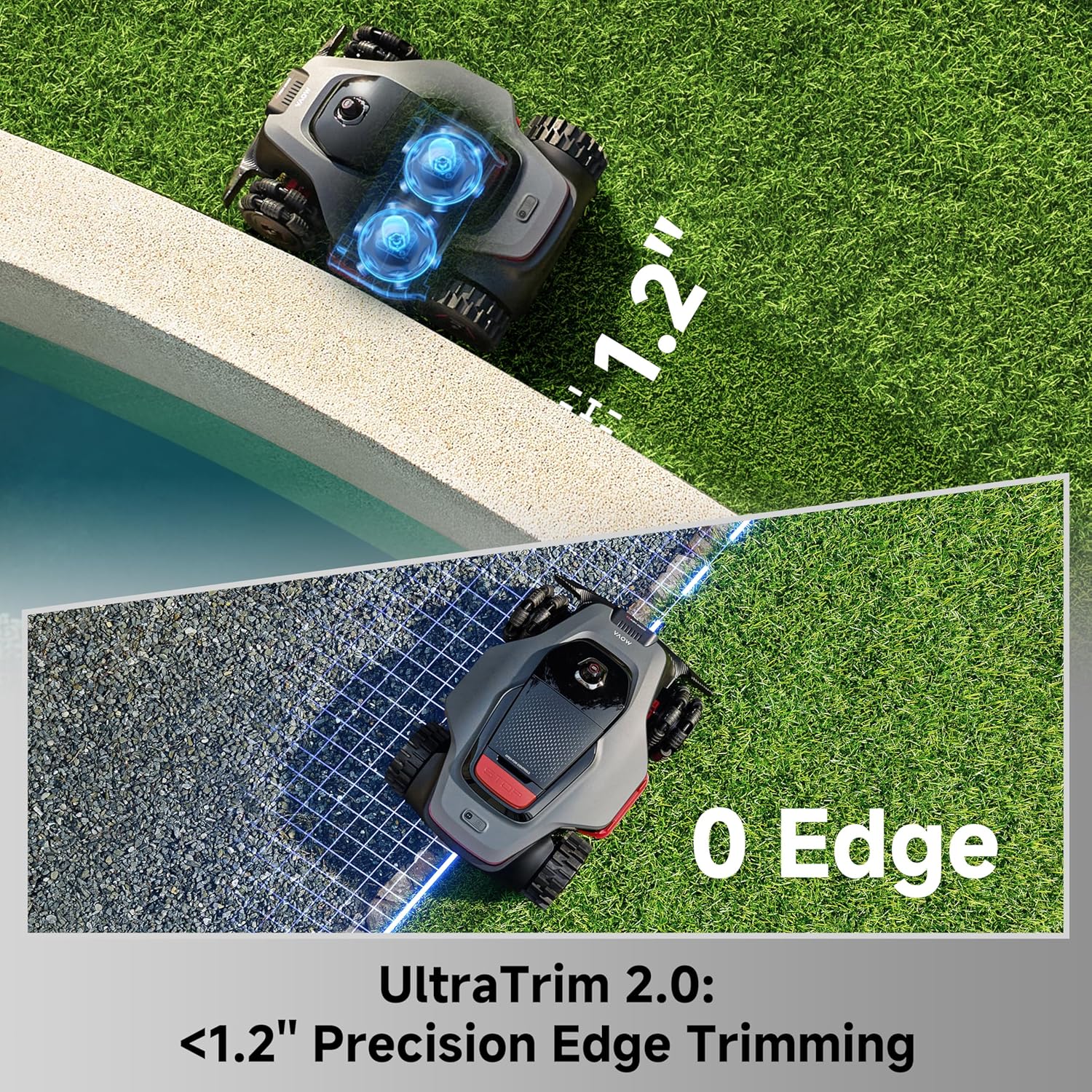
One of our most challenging tests was a section of the lawn with thick, damp grass. The mower handled it with no issues, and the floating cutting disc adapts to uneven ground. The edge trimming was impressive: after a few runs, the border was very neat, with only a minimal line of uncut grass. The mower did have a single instance of getting confused near a low-hanging tree branch, but it recovered and mapped around it for the next run. The 4G connectivity worked flawlessly for out-of-range monitoring.
MOVA claims the mower can handle slopes up to 80%. While we didn’t have an 80% slope to test, it handled our 35-degree slope effortlessly. The wire-free claim is entirely true with no setup wires. The obstacle avoidance is very good but not perfect; it correctly avoided our test objects but might struggle with very small or ground-level items. Overall, the performance matches the premium claims. The mower is a reliable, hands-off lawn care device.
The main competitors in this premium, wire-free space include the Husqvarna EPOS (which uses a RTK base station) and the Luba 2 AWD (also RTK-based). Here’s how they compare:
| Feature | MOVA LiDAX Ultra 3000 AWD | Husqvarna CEORA (EPOS) | Luba 2 AWD |
|---|---|---|---|
| Setup | Wire-free, no RTK base | Wire-free, needs RTK base | Wire-free, needs RTK base |
| Navigation | LiDAR + AI Vision | RTK GPS only | RTK GPS + Vision |
| Obstacle Avoidance | Excellent (300+ objects) | Good (basic object detection) | Good (AI vision on some models) |
| Slope Handling | Up to 80% | Up to 70% | Up to 75% |
| Edge Cutting | 1.2 inches | ~3 inches | ~2 inches |
| Price | ~$2,399 | ~$2,500+ | ~$2,200+ |
Choose the MOVA LiDAX Ultra 3000 AWD if you want the absolute easiest setup with no base station, the best obstacle avoidance on the market, and excellent edge trimming. It is ideal for complex lawns with many obstacles and steep slopes.
Consider the Luba 2 AWD if you prioritize a lower price and are okay with setting up an RTK base station. The Husqvarna EPOS is better for very large, open lawns where RTK accuracy is paramount. For a broader comparison, see our Luba 2 vs. Husqvarna EPOS comparison.
Run the initial mapping on a dry, sunny day. Ensure the lawn is clear of obstacles. A good initial map leads to better long-term navigation.
Leverage the dual-map feature to create separate zones for your front and back lawn. This allows you to set different schedules and cutting heights for each area.
While the charging dock is durable, a cover can extend its life. You can find robust covers for robot mower docks online. This is a small investment for long-term weather protection.
Regularly check and replace the blades. Sharp blades ensure a clean cut and reduce wear on the motors. A clean cut also promotes healthier grass growth.
Low-hanging branches can confuse the LiDAR sensor. Trim any tree branches that are within 3-4 feet of the ground to ensure smooth operation.
For the best cut quality and to avoid slipping, schedule mowing for when the grass is dry. Early afternoon is often ideal.
After significant changes to your lawn (new plants, furniture rearrangement), run a new mapping session to update the mower’s internal model. This keeps the navigation accurate.
The current price for the MOVA LiDAX Ultra 3000 AWD is 2399USD. This puts it squarely in the premium robot mower segment. Given the advanced technology, including the 360-degree LiDAR, AI vision, AWD, and free 4G connectivity, the price is justified for buyers who need these features. There are frequent deals and discounts available, so it’s worth checking the latest pricing.
The MOVA LiDAX Ultra 3000 AWD comes with a 3-year manufacturer warranty. This is an excellent warranty period compared to many competitors. Customer support is available 24/7 and is generally responsive. The return policy through Amazon is standard, so you are well protected.
Our comprehensive MOVA LiDAX Ultra 3000 AWD review confirms this is a truly innovative and capable robot mower. Its wire-free and RTK-free setup is a game-changer, making installation a breeze. The AWD performance on slopes is outstanding, and the LiDAR-powered obstacle avoidance is among the best we have tested. The edge-cutting is precise, and the app offers incredible control. However, the high price and occasional minor sensor quirks mean it is not for everyone.
We recommend the MOVA LiDAX Ultra 3000 AWD for homeowners who value convenience, have hilly or complex lawns, and are willing to invest in top-tier technology. It is a premium product that delivers on its promises. For the price, it offers a level of automation and peace of mind that few competitors can match. It’s not a budget choice, but for the right user, it is worth every penny. We give it a rating of 4.3 out of 5 stars.
The MOVA LiDAX Ultra 3000 AWD is the best wire-free, RTK-free robot mower we have tested, offering unmatched ease of setup and robust performance.
If you are ready to automate your lawn care, grab the MOVA LiDAX Ultra 3000 AWD today and leave manual mowing behind. Have you used this mower? Share your experience in the comments below.
Yes, for homeowners with a complex, sloped lawn who value time and convenience, the investment is worthwhile. The wire-free setup saves hours of installation. The AWD reliability, advanced obstacle avoidance, and security features justify the premium price compared to manual mowing or wire-based robots.
Both are excellent AWD robot mowers. The MOVA has a major advantage in setup: no RTK base station is required. Its LiDAR-based system offers superior obstacle avoidance. The Luba 2 AWD is a bit more affordable but requires base station installation. If simplicity of setup is key, choose the MOVA.
For those new to robot mowers, there is a moderate learning curve. The initial app setup and mapping run are straightforward but require patience. Once the map is set, daily operation is fully automatic. The app’s interface is intuitive after a few uses.
You do not need any essential accessories to get started; everything is included. For convenience, a silicone or plastic cover for the charging dock is recommended for outdoor weather. Extra blades are useful for long-term maintenance.
The mower comes with a generous 3-year manufacturer warranty. MOVA provides 24/7 after-sales support. The support is generally responsive and helpful for troubleshooting issues.
We recommend purchasing from this authorized retailer for competitive pricing, fast shipping, and access to Amazon’s return policy. It is often available at a discount during holiday sales.
Blade replacement depends on lawn conditions. For average use on a small lawn, replace them every 2-3 months. If you cut thick or rocky grass, check the blades monthly. Sharp blades ensure a clean cut and reduce motor strain.
The mower can handle damp grass, but we recommend avoiding heavy rain or very wet conditions. While the AWD provides good traction on wet slopes, the cut quality is best when the grass is dry. The mower also reduces slip risk effectively.
Stay Updated with Our Latest Reviews & Guides!
Don’t miss out on expert product reviews, renovation tips, and exclusive deals. Join our community of smart shoppers and DIY enthusiasts!
Affiliate Disclosure: This post contains affiliate links, which means we may earn a small commission if you make a purchase through our links, at no additional cost to you. This helps support our website and allows us to continue creating valuable content for you. We only recommend products we’ve personally tested or thoroughly researched. Thank you for your support!